
The Rain Trees of Taiping
- Malaysia Raja
- Aug 30, 2025
- 3 min read

Updated: Sep 4, 2025

🌿 This is the second part of my Taiping Series - a weekly journey back to the town that shaped us. Each Saturday at noon, I’ll share another glimpse into Taiping’s history, culture, or everyday life.
If rain was the soundtrack of our school days, then the rain trees were the backdrop. Their sweeping canopies line the Lake Gardens, arching gracefully over the water like protective umbrellas. To generations of Taipingites, they’ve been more than scenery - they were and are silent witnesses to endless friendships, stories, and memories made in their shadows. And they also continue to be the most iconic symbols of the town.

Introduced more than 130 years ago during the British colonial era, the rain trees (Samanea Saman) were chosen for both beauty and utility. Their broad crowns offered shade in a town already blessed with abundant rainfall, and their presence quickly transformed the Lake Gardens into one of the most picturesque landscapes in Malaya. What began as an ornamental choice grew, over time, into an enduring part of Taiping’s identity.
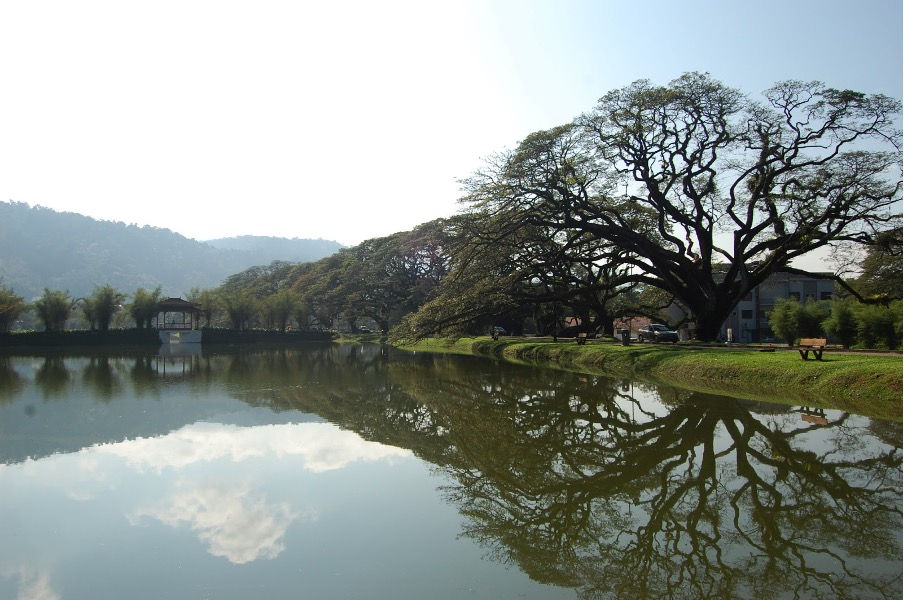
Walk or drive along Jalan Pekeliling, under those sweeping green arches, and you’ll feel it: a sense of calm, wonder, and continuity. Visitors and photographers see them as icons of beauty, but for locals, the trees carry something deeper - a quiet rhythm that mirrors Taiping’s unhurried pace of life.
The rain trees do more than inspire feelings. They work quietly to care for the town. Their vast canopies act as natural air conditioners, cooling the Gardens even on the hottest afternoons. Their roots bind the lake’s banks, preventing erosion. Their branches provide homes for birds and insects, adding to the biodiversity that makes Taiping so special. In many ways, these trees are the guardians of the Lake Gardens, ensuring that this shared green space remains wholesome.

Over the decades, some of these older giants have grown heavy, their limbs stretching low across the road and lake. Rather than cut them down, the town has supported them with solid metal props - a practical gesture of respect and affection. It shows how much the people of Taiping value these trees. They are not disposable greenery; they are heritage, worthy of care and preservation.


Culturally too, rain trees hold a quiet symbolism. Across the world, they have been revered as trees of shelter and protection - their massive crowns offering refuge to humans, animals, and even smaller plants. In Taiping, they’ve taken on this role in spirit as much as in form. When you walk beneath the Rain Trees, you don’t just see shade. You feel held - by history, by memory, by the enduring grace of nature.

It’s no wonder that many call them the “jewels in Taiping’s crown.” They give our town its most magical frame, one that has appeared in postcards for more than a century yet never loses its wonder. And unlike monuments of stone, these living landmarks keep growing, keep breathing, keep holding us in their green embrace.
So the next time you pass under their arches, pause a little. Look up. Remember that these are not just trees. They are part of us - part of our story - a core element of Taiping's soul.

🌿 Rain Tree (Samanea Saman) facts for the curious:
Native: Central & South America (brought to Malaya during colonial times)
Local Names: Pokok hujan (“rain tree”) and pokok pukul lima (“five o’clock tree”) - because the leaves fold up at dusk or when rain approaches.
Leaves: Delicate, feathery, folding as though the tree is tucking itself to sleep.
Flowers: Small, powder-puff blooms - pink and white, often overlooked unless you get close.
Pods: Long, dark seed pods that drop and, when damp, release a sweetish smell.
Shade: Canopies often spread wider than the tree is tall, creating Taiping’s famous “green tunnels.”
Taiping may have changed with time, but its stories still flow. Next Saturday @ Noon, join me at the Old Market - where bets on the rain have been a tradition since the 1950s!


You v nicely set us on a picturesque journey revisiting these wonderful trees in the Taiping Lake Gardens from afar😄... If I'm not mistaken, in the past, at many parts of the town, there were Rain Trees too .. and also Angsana trees (I remember a couple of big Angsana trees next to the Tai Chien side street - after fruiting n when the seed pods burst, a lot of red seeds will be scattered around).